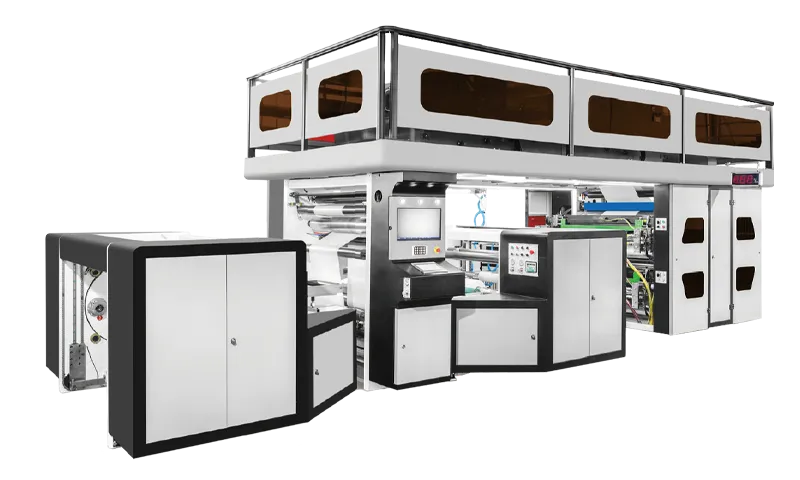
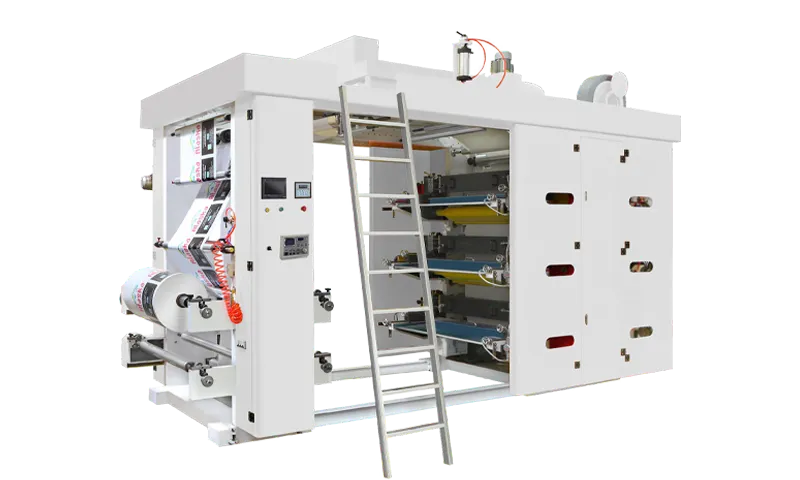
You‘ve just finished a long run on your stack-type flexo press. The labels look good at first glance, but the QA inspector finds faint streaks across the solid areas and a subtle registration drift between colors. Nothing catastrophic—just enough to make the job unacceptable for the customer. These small defects don’t appear out of nowhere. They build up over time: a tiny nick in the doctor blade, dust on the anilox, a few degrees of temperature drift in the drying section. On a Stack‑Type Flexo Printing Machines line, where multiple independent color stations work in sequence, small problems in one station propagate through the rest of the press. This guide walks through a proactive maintenance strategy that catches issues early—not after they‘ve ruined a roll.
The most common mistake in flexo maintenance is reaching for an adjustment tool before picking up a cleaning cloth. Ink residue on anilox cells changes effective volume by 5–10%, while dried adhesive on impression cylinders alters the effective diameter—directly affecting print repeat length. For Stack‑Type Flexo Printing Machines, where each color station operates independently, contamination in one station creates a defect pattern that looks like a machine-wide problem but only requires a cleaning to resolve.
Daily cleaning protocol. Use a soft brass brush and anilox cleaning solution to remove dried ink from the anilox roller surface. Never use steel tools, which scratch the ceramic coating. Clean doctor blades with a lint-free cloth and solvent. Wipe impression cylinders with isopropyl alcohol to remove ink mist and paper dust.
Weekly deep clean. Remove the anilox roller for ultrasonic cleaning. Anilox roller cleaning machines using ultrasonic vibration effectively remove cured ink from the roller surface. Inspect plate cylinders for adhesive residue from tape or sticky-back plates. Clean circulating ink lines and filters.
Register drift is the most frustrating defect on a stack-type press because it often appears gradually, making it hard to isolate the source. The machine runs fine for hours, then the colors start walking. The root cause is often roller surface degradation. When an anilox roller wears unevenly, it delivers inconsistent ink volume across the web width—one edge prints darker than the other, and the operator compensates by adjusting impression pressure, which shifts register. When a plate cylinder has surface damage from plate mounting tape residue, the plate doesn‘t seat flat, and the print repeat length changes as the cylinder rotates. The solution is proactive surface management. Track anilox roller usage in linear meters. Replace or recoat ceramic anilox rollers after 10–15 million linear meters. Check plate cylinders for nicks or scratches before mounting plates. For Stack‑Type Flexo Printing Machines using the GYT series with doctor blade systems, the enclosed doctor blade design reduces anilox wear by maintaining consistent ink pressure, extending roller life.
Unlike CI presses where the web is clamped against a central drum, stack-type presses rely on each station‘s independent nip to control web movement. This makes them more sensitive to tension variations—but also more versatile for double-sided printing and mixed substrates. Tension problems manifest as wandering register that changes with roll diameter: perfect at the start of a roll, drifting as the roll empties.
Detect tension issues before they affect print. Look at the web path between color stations during operation. If the web flutters or shows slack between nips, tension is too low. If the web stretches or shows chatter marks, tension is too high. Check the dancer roller position. At steady speed, the dancer should float in the middle of its travel range. If it sits at the top or bottom, the tension setpoint needs adjustment.
Automated tension control. Modern stack presses integrate closed-loop tension control using load cells or dancer position feedback. The system adjusts unwind brake pressure and pull roll speed to maintain consistent tension as roll diameter changes. For the ZYT2 series, the feeding and discharging system uses magnetic powder brake and clutch control, with optional Mitsubishi automatic tension controller for precise tension management.
Ink-related print defects—streaking, voiding, or color variation—almost always trace back to the doctor blade or circulation system. A worn doctor blade allows excess ink to pass through, causing flooding and dot gain. A nicked blade creates a streak of missing ink that repeats every revolution. The enclosed doctor blade system on Xinxin‘s GYT series provides consistent ink pressure across the roller width, reducing wear and improving ink transfer uniformity. Daily inspections include checking the blade edge for nicks or wear; a 0.5 mm flat spot or visible notch indicates replacement is needed. Weekly maintenance includes cleaning the ink circulation system—removing settled pigment from the tank bottom, flushing supply lines with solvent, and replacing filters. For the ZYT2 series, the ceramic anilox roller with enclosed doctor blade delivers precise ink metering, and the printing plate roller surface is specially treated (hardened or chrome-plated) to improve corrosion and wear resistance.
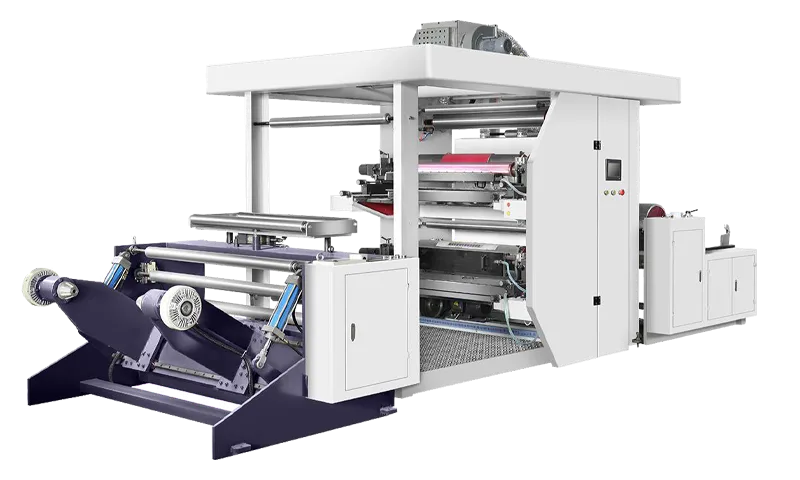
Not all print defects come from mechanical wear. Intermittent issues—a registration error that appears only when the press runs above 80 m/min, a color shift that happens at random—often trace back to electrical or control system problems. Faulty sensors can cause inconsistent web edge detection, leading to gradual registration drift over a run. Poor encoder feedback can cause the PLC to misread print cylinder position, especially at higher speeds.
Routine electrical checks. Verify all sensor lenses are clean and properly aligned. Check encoder couplings for tightness. Monitor PLC error logs for recurring fault codes. For Stack‑Type Flexo Printing Machines with 360-degree motorized point-and-shoot synchronous wheel drive, ensure that servo tuning parameters are optimized for the typical speed range.
Keep baseline data. Record voltage readings from load cells and pressure sensors after each calibration. A 10% drift from baseline often precedes component failure.
The table below outlines a practical maintenance schedule for stack-type flexo printing machines, based on field experience across multiple converter facilities.
| Frequency | Task | Why It Matters |
|---|---|---|
| Daily | Clean anilox roller with soft brush and solution | Prevents cell clogging; maintains consistent ink volume |
| Daily | Wipe impression cylinders with isopropyl alcohol | Removes ink mist; prevents transfer defects |
| Daily | Inspect doctor blade edge for nicks or flat spots | Catches worn blade before it causes streaking |
| Daily | Check ink viscosity and adjust if needed | Ensures consistent color density |
| Weekly | Remove anilox for ultrasonic cleaning | Restores full ink transfer capacity |
| Weekly | Clean ink circulation tank and replace filters | Prevents pigment settling and contamination |
| Weekly | Check web guide sensors for dust or misalignment | Prevents side‑to‑side registration drift |
| Monthly | Check bearing temperatures with infrared thermometer | Identifies failing bearings before they seize |
| Monthly | Verify encoder coupling tightness | Prevents intermittent speed feedback errors |
| Monthly | Inspect plate cylinders for surface damage | Ensures proper plate seating |
| Quarterly | Recalibrate tension controller setpoints | Maintains consistent tension as components wear |
| Annually | Replace anilox rollers (15 million linear meters) | Restores original print quality |
For operators running Xinxin‘s ZYT2 Automatic Stack Type Roll Material 2 Color Flexographic Printers Flexo Printing Machine, the press’s PLC touch screen control helps streamline this schedule by providing operating hour counters and maintenance reminders directly on the HMI. The machine supports paper, film, cardboard, textiles, metallic film, PE, PP, and roll paper substrates for applications including e‑commerce packaging, pharmaceutical labeling, food pouches, and personal care packaging.
Q: How often should I replace ceramic anilox rollers?
A: Track linear meter usage. For standard water-based inks, ceramic anilox rollers typically last 15–20 million linear meters. Replace sooner if you see inconsistent ink laydown after cleaning, or if the roller shows visible cell wall wear under magnification.
Q: Why does my stack press print fine at 50 m/min but lose register at 100 m/min?
A: This often indicates dynamic imbalance in the drive train or insufficient tension control response time. At higher speeds, inertia magnifies any looseness in gears, couplings, or bearings. Check all mechanical connections between the drive motor and print cylinders. Also verify that the tension controller‘s response time setting is appropriate for the target speed range.
Q: Can I run UV inks on a standard stack flexo press?
A: Yes, but requires interstation UV curing units. Xinxin offers stack presses with integrated LED UV curing systems, which reduce energy consumption by 60% compared to mercury lamps and eliminate VOC emissions. The instant on/off capability also allows printing on heat‑sensitive substrates that would warp under traditional dryers.
Q: What’s the expected service life of key components?
A: With proper maintenance, ceramic anilox rollers: 15–20 million linear meters; doctor blades: replace every 2–4 weeks depending on runtime; impression cylinder bearings: 5–7 years; plate cylinders: 10+ years if properly stored and handled.
Q: How do I choose between the ZYT2 and GYT2 models?
A: The ZYT2 series (2 to 6 colors) uses ceramic anilox rollers with enclosed doctor blade, ideal for general paper and film printing. The GYT2 series adds doctor blade compatibility for plastic film, offering better ink control for high‑opacity colors on non‑porous substrates. Both offer 1200 mm max printing material width and 1160 mm printing width.
Handle in‑house when. Ink viscosity drifts, anilox cells clog, doctor blade wears, or web tension needs recalibration. These are routine maintenance tasks that operators can perform with proper training and the right tools. Keep a maintenance log to track component life and identify patterns.
Call for support when. Bearings run hot even after lubrication, drive gears show visible wear or uneven tooth contact, or you suspect electronic component failure (e.g., PLC, servo drive, or sensor malfunction). For drive train issues on stack presses, where multiple color units share common drive components, symptoms like consistent registration error that repeats every cylinder revolution typically require factory repair.
Xinxin provides comprehensive technical support through professional training, remote diagnosis, and quick repair services. After‑sales support includes fast response spare parts stock and specialized commissioning and repairs.
When daily print quality demands reliability over high volume, the engineering of the press itself determines how easily operators can maintain consistent output. Xinxin manufactures the ZYT2 Automatic Stack Type Roll Material 2 Color Flexographic Printers Flexo Printing Machine for converters who need precise, stable printing without the complexity of multi‑color CI presses.
The ZYT2 series handles paper, film, cardboard, textiles, and metallic film, with applications ranging from e‑commerce logistics packaging and pharmaceutical labeling to food pouches and personal care packaging. Technical specifications include 2‑color configuration, printing speeds from 5 to 100 m/min, register precision of ±0.15 mm, and max printing material widths up to 1200 mm (ZYT2‑1200 model). The press features PLC touch screen control for the whole machine, main motor frequency control, separate reducing motor drive, and register precision holding across the full speed range. Optional extras include anilox roller cleaning machines using ultrasonic vibration and flexo plate making and mounting equipment.
With over 25 years of expertise in printing equipment, Xinxin has become the supplier of 90% of paper bag machine supporting printers in China, serving as an “infrastructure‑level” supplier to the industry. After‑sales service includes professional training, remote diagnosis, quick repair, fast response spare parts stock, specialized commissioning, and repairs to maximize production efficiency and reduce equipment downtime.
→ Request a quote from Xinxin for the ZYT2 Automatic Stack Type Roll Material 2 Color Flexographic Printers Flexo Printing Machine — Share your target substrates (paper, film, or board), printing width, and expected daily run length. Their technical team can recommend the right configuration and provide a preventative maintenance schedule tailored to your production volume.

Fast response
Spare parts stock
Specialized commissioning and repairs/p>