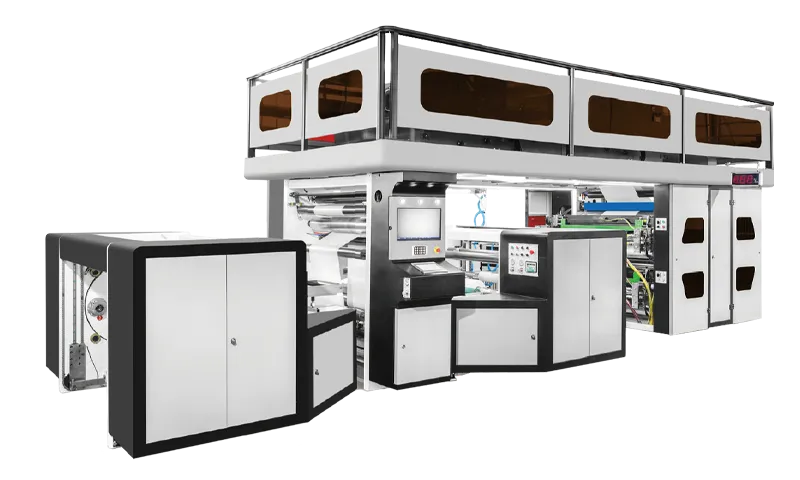
You're running a flexible packaging line. The substrates change—film one day, paper the next, metallic foil on a rush job. The print jobs vary—2 colors for simple bags, 6 colors for retail packaging. You need a press that handles the variety without constant reconfiguration.
A stack-type flexo printing machine is built for that versatility. With configurations from 2 to 8 colors, roll-to-roll operation, and substrate flexibility that covers film, paper, cardboard, metallic film, and textiles, it's designed for the varied demands of modern packaging production. This guide covers what makes stack-type flexo presses different, what the available models offer, and how to choose the right one for your operation.
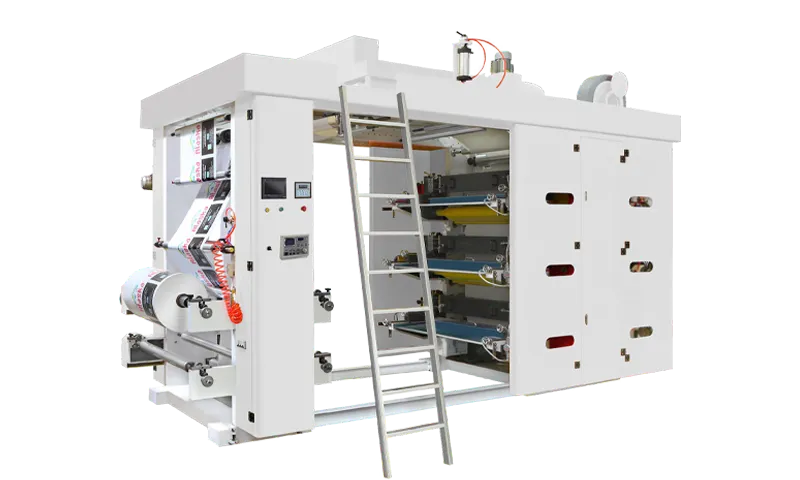
Stack-type flexo presses are defined by their vertical arrangement of color stations and their ability to handle diverse substrates and run lengths.
The "stack" in stack-type refers to the vertical arrangement of printing stations. Unlike CI (central impression) presses where all stations surround a single cylinder, stack-type presses stack the color stations vertically. This design is more compact, easier to access for maintenance, and simpler to configure for different color counts.
One of the defining advantages of stack-type flexo presses is their ability to handle a wide range of substrates. The GYT4 model, for example, handles paper, film, cardboard, metallic film, and textiles. That means one press can switch between flexible packaging films, paper bags, and cardboard cartons without major reconfiguration. For converters running mixed product lines, that flexibility is a major advantage.
Stack-type flexo presses are designed for both short and long print runs. Quick color changes and easy setup mean you can run a short job without wasting hours on changeover. For print shops that serve diverse clients with different quantities, that efficiency matters.
Xinxin offers a range of stack-type flexo printing machines, from 2-color to 8-color configurations, with varying widths and features.
The GYT series includes 2, 4, 6, and 8-color models. The GYT4 model, for example, is available in 800mm, 1000mm, and 1200mm widths. The GYT6 model comes in 600mm, 800mm, and 1000mm widths. All models offer printing speeds of 5-100m/min with register precision of ±0.15mm. The printing length range of 230-1000mm covers most common packaging formats.
The ZYT series offers 2, 4, and 6-color automatic stack-type roll material flexographic printers. These models are designed for automated roll-to-roll production, with PLC touchscreen control and frequency control of the main motor.
The machine design is optimized to complete a large number of printing tasks in a shorter period of time, which greatly improves the output of the production line and helps to increase the productivity and competitiveness of enterprises. Energy-saving design reduces operating costs over the life of the equipment.
Below is a quick reference table for key GYT series specifications:
| Model | Colors | Max Width | Speed | Precision | Best For |
|---|---|---|---|---|---|
| GYT2 | 2 | 1200mm | 5-100m/min | ±0.15mm | Simple color work |
| GYT4 | 4 | 1200mm | 5-100m/min | ±0.15mm | General packaging |
| GYT6 | 6 | 1000mm | 5-100m/min | ±0.15mm | Complex designs |
| GYT8 | 8 | 1200mm | 5-100m/min | ±0.15mm | High-end retail packaging |
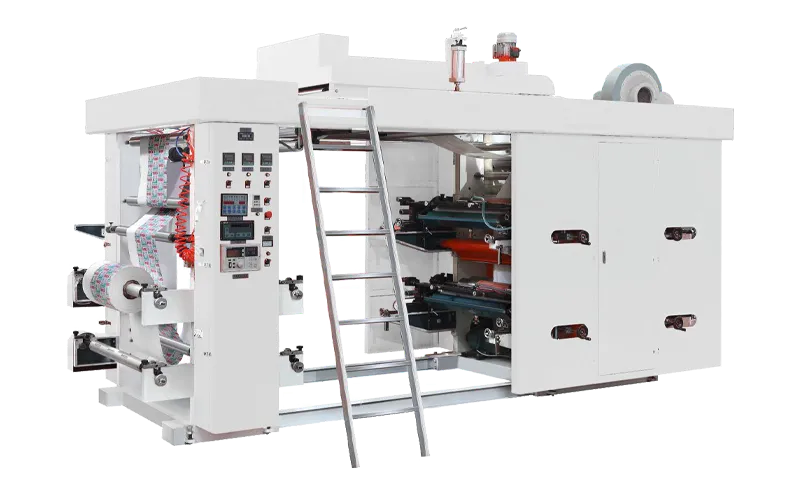
Xinxin highlights several key features that make their stack-type flexo presses stand out. Here's what they mean in practice.
Advanced printing technology ensures high graphic clarity, color reproduction, and precision. Printing quality remains stable even at high speeds. For converters running long jobs at speed, that consistency is critical—no drift, no color shift, no wasted material.
The ability to support multi-color simultaneous printing greatly enhances production versatility and efficiency, especially suitable for complex designs and colorful printing needs. A 6-color or 8-color press opens up new markets—retail packaging, premium labels, and high-end flexible packaging that 2-color presses can't handle.
The rollers and other core components have been specially treated to be extremely resistant to wear and tear, extending service life. In high-volume production, wear resistance translates directly to lower maintenance costs and less downtime.
The whole machine is controlled through a PLC touchscreen interface. Operators can set parameters, monitor production, and diagnose issues from a single screen. For production lines with high turnover, that ease of use reduces training time and operator error.
Q: What can it print on?
A: Stack-type flexo presses handle a wide range of substrates including paper, film, cardboard, metallic film, and textiles. This versatility makes them suitable for packaging converters who run mixed product lines.
Q: Stack vs. CI — what's the difference?
A: CI (central impression) presses have all color stations arranged around a single central cylinder, offering better registration for thin films but at higher cost and with less accessibility. Stack-type presses stack the color stations vertically, offering easier access for maintenance, simpler setup, and more compact footprint. The choice depends on your substrate mix and budget.
Q: Speed and precision — what to expect
A: Stack-type flexo presses typically run at 5-100m/min with register precision of ±0.15mm. The printing length range is 230-1000mm, covering most common packaging formats.
Q: What kind of support comes with it?
A: Xinxin provides comprehensive technical support and after-sales service, including professional training, remote diagnosis, quick repair, fast response, spare parts stock, and specialized commissioning and repairs. This support infrastructure helps maximize production efficiency and reduce equipment downtime.
Stack-type flexo printing machines aren't for every application. Here's when they make the most sense.
You run film, paper, and board. If you run film, paper, and cardboard on the same line, the substrate flexibility of a stack-type press is a major advantage. CI presses are better for thin films but less versatile across substrate types.
You need color without the CI price. Stack-type presses offer 4, 6, or 8 colors at a lower price point than CI presses. For converters who need color but don't need the registration precision of a CI press on thin films, stack-type delivers value.
Your jobs are short and long. Quick color changes and easy setup make stack-type presses suitable for both short and long runs. For print shops that serve diverse clients with different quantities, that flexibility is a key selling point.
You need easy access for upkeep. The vertical stack design makes each color station accessible for cleaning, plate changes, and maintenance. For high-volume production, that accessibility translates to less downtime.
Xinxin has been manufacturing flexographic printing equipment with a focus on quality and customer support. The GYT and ZYT series represent the range of stack-type flexo presses available, each designed for different production needs. Before you commit to a flexo press, evaluate your substrate mix, color requirements, and typical run lengths. The stack-type route isn't for every shop—but for converters with varied needs, it's exactly what's required.
Ready to explore a stack-type flexo printing machine for your operation? Contact a supplier for a quote or product consultation. Share your typical substrates, color count requirements, and monthly volume—their team can recommend the right model for your specific application.
Jun 10, 2026
Jun 02, 2026

Fast response
Spare parts stock
Specialized commissioning and repairs/p>